Wildlife Desk
How Rescue Centers Prepare Orphaned Primates for a Second Chance
A closer look at the delicate routines, surrogate care, and social reintroduction strategies used in wildlife rehabilitation.
Read previewWrapped around a plush companion in a Colombian wildlife sanctuary, Julio’s quiet fight to heal is turning one rescue story into a global moment.

Feature Story
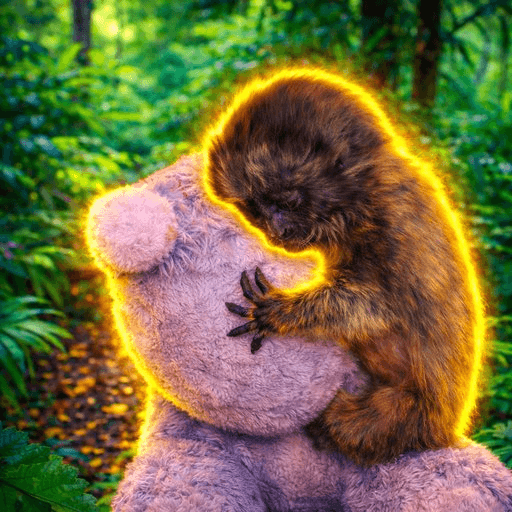
Julio’s story begins with an image that is difficult to shake: a baby gray titi monkey, small enough to fit inside the curve of a forearm, clinging to comfort while the world around him is still being carefully rebuilt. Public footage from Colombia shows an infant in rehabilitation, attended by caretakers who appear to be balancing tenderness with the discipline that wildlife recovery demands.
The reported goal is not to turn Julio into a mascot, but to steady him. That means reducing stress, supporting normal development, and preserving the instincts he would need if he is ultimately returned to the forest. In rescue settings, every soothing gesture carries a second purpose: help now, while protecting the possibility of a wild future later.
Watch
Rescue footage helped transform Julio from an isolated case into a widely shared symbol of vulnerability, care, and hope.
Viral wildlife moments often move quickly, but Julio’s appeal feels different. It is not just that he is visibly fragile. It is the intimacy of the scene: the way a young animal reaches for steadiness, the way human care is offered without spectacle, the way viewers instinctively understand the stakes even before they know the full story.
For many people online, the emotional response has echoed the tenderness once stirred by Punch, the baby monkey in Japan. But Julio’s story stands on its own. His image is not simply adorable; it is a reminder that rescue is often slow, medically careful, and inseparable from the larger question of whether threatened wildlife can still find safe places to return to.
“What makes Julio unforgettable is not only his smallness, but the visible effort to keep wildness intact while helping him survive.”
One of the most arresting details in public accounts of Julio’s recovery is the plush companion or surrogate soft object placed within reach. Caretakers reportedly use it to provide reassurance and lower stress, echoing a principle common in infant animal care: comfort can be essential, but it has to be given in a way that supports rehabilitation rather than dependence on people.
For a baby primate, contact matters. In the wild, warmth, touch, and constant proximity are woven into survival. A surrogate cannot replace a mother, but it can offer a bridge through an unstable period, especially when the alternative is fear, disorientation, or shock. The poignancy of Julio holding onto something soft is what many viewers have responded to first, even before understanding the conservation story behind it.
Rehabilitating a young monkey is not a straight line. Julio’s next steps depend on the same factors that shape many infant rescues: physical stabilization, behavioral development, and whether he can maintain or regain the responses needed for survival outside human care. The aspiration, according to public descriptions of the rescue, is eventual release. The outcome, as with any wildlife rehabilitation effort, will depend on what Julio can safely sustain.
That careful phrasing matters. Release is a goal, not a guarantee. Ethical sanctuary and rehabilitation work rests on patience, observation, and the refusal to rush a moving story toward a satisfying ending before the animal is ready.
Gray titi monkeys are native to Colombia, and conservation reporting has described the species as endangered. That status gives Julio’s story a wider frame. A single rescue can feel personal because it is personal, but it also gestures toward habitat pressure, fragmentation, and the vulnerability of small primates whose lives depend on stable, connected forest.
When a baby like Julio draws global attention, the best outcome is not only sympathy. It is sustained attention to the systems that keep animals from needing rescue in the first place and to the specialists who step in when they do.
Conservation
Rehabilitation centers do essential work in the narrow space between crisis and recovery. For endangered species, that work can help preserve individual lives while also supporting broader conservation aims, from health monitoring to carefully managed reintroduction. Julio’s story resonates because it shows care in its most intimate form, but it also points to the long institutional labor behind every successful release.
Reader Context
This article uses careful language because much of Julio’s story has circulated through social footage and brief public reports. Where facts are not fully confirmed, the copy reflects that limit.
Related Stories
Wildlife Desk
A closer look at the delicate routines, surrogate care, and social reintroduction strategies used in wildlife rehabilitation.
Read previewWildlife Desk
Conservation groups are working to restore habitat corridors that keep threatened species connected to the wild.
Read previewWildlife Desk
Internet tenderness can fade quickly, but the best rescue stories redirect emotion toward habitat, science, and long-term care.
Read preview